Digital healthcare is a booming industry. According to one recent report, the global digital healthcare market is projected to grow from an estimated $147bn in 2019 to $234.5bn in 2023. If we look at apps alone (which is just one element of digital healthcare), there are now more than 300,000 health-related apps available – more than double the amount five years ago.
Much of this growth is being driven by the urgent need to innovate in chronic diseases such as cancer, diabetes, mental illness, heart disease and respiratory disease. Approximately half of all adults worldwide today are living with a chronic condition, and global spending on chronic conditions is projected to reach a healthcaresystem bankrupting $47trn by 2030.
The extraordinary costs are largely driven by the complexity of managing chronic conditions – the multiple healthcare personnel involved, the burden of regular review and follow-up, the difficulties around patient self-care and management, the administrative burden – and it is hoped that digital healthcare solutions will prove transformative in this area.
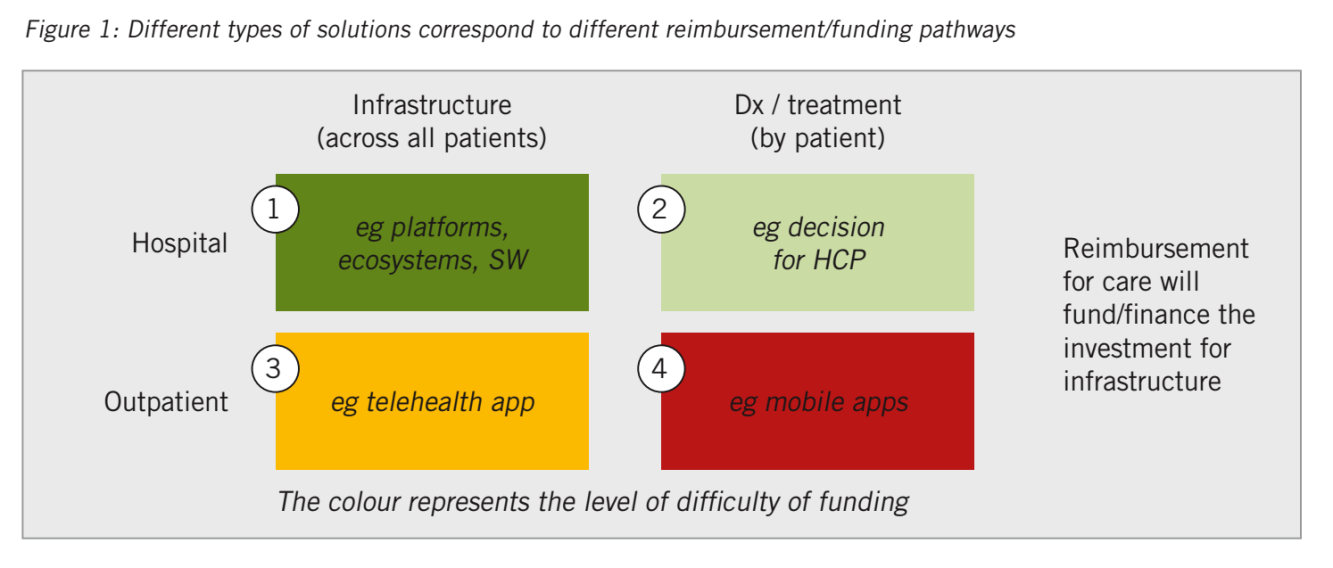
But while the rationale and transformative potential of digital healthcare solutions are undeniable, who’s going to pay for them, how and under which circumstances?