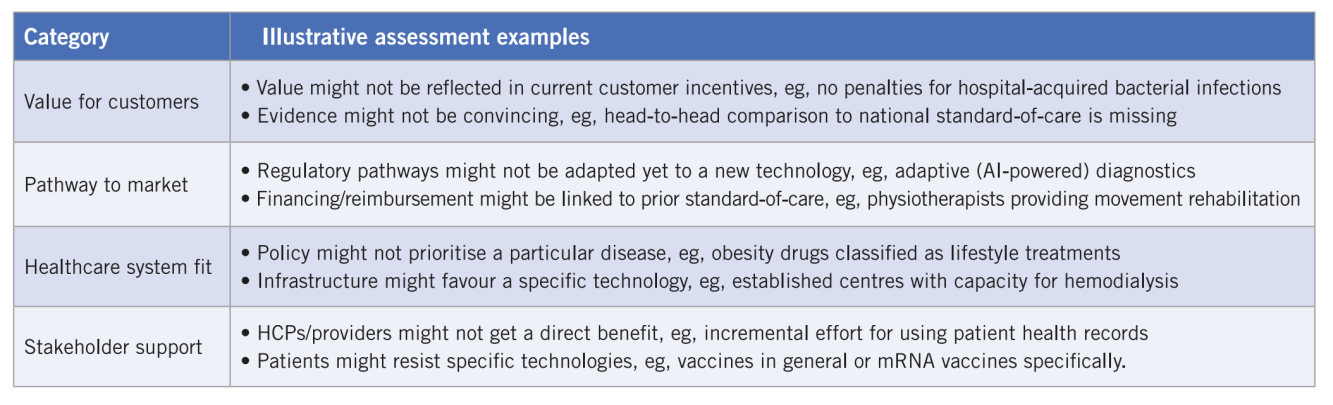
New healthcare products often face challenges in gaining market acceptance, especially if they combine multiple types, like drugs, devices, diagnostics or digital tools. The most innovative products may face the biggest hurdles because there are no existing examples to guide their market entry. The readiness of a healthcare product for adoption can be evaluated using four key categories.
1. Value for customers – the greater the value for customers, the strong the basis for all other adoption factor; major risks are hard to overcome
2. Pathway to market – strict healthcare laws mean regulatory approval and funding or reimbursement often create major obstacles
3. Healthcare system fit – unfortunately, even the best healthcare products may need major policy changes or new infrastructure
4. Stakeholder support – healthcare professionals (HCPs)/ providers focus on direct benefits, while patients can become strong supporters or critics
Because the healthcare market is complex, new products often face multiple obstacles to market readiness. Everyone who has launched one knows the challenges.
Before launching a new healthcare product, cross-functional teams – including regulatory, market access, medical affairs, marketing and other relevant functions – should evaluate the product’s market readiness. Ideally, this assessment takes place before entering late-stage development to allow time for generating any additional evidence if needed.
Some healthcare product companies use a structured market readiness assessment to guide their product launch teams through a comprehensive qualitative evaluation across categories.