“Drugs don’t work in patients that don’0t take them” Everett Koop, former US Surgeon General. This famous quote from 1985 has perhaps never been more relevant. It is estimated that non-adherence to medication is associated with almost 200,000 deaths in Europe each year, as well as a staggering cost of EUR 80-125 bn. With approximately half of all adults worldwide living with a chronic condition and requiring regular medication, it is understandable why changing behaviour around adherence is a major focus.
It speaks to a wider challenge in healthcare to bring about behaviour change. From public advisory campaigns to combat obesity or cardiovascular disease to legislative curbs on drinking and smoking, attempts to persuade people to change their behaviours are commonplace, but often ineffective.
Why? People do not necessarily resist change, but they do resist being changed. Long-term change must come from the individual. There are said to be three key drivers of behaviour change: motivation and capability, which are internal condititions, and opportunity, which is an external condition.
So when external entities – whether they are governments, companies or otherwise – attempt to encourage behaviour change, they can often provide the opportunity, but influencing the motivation and capability is much harder.
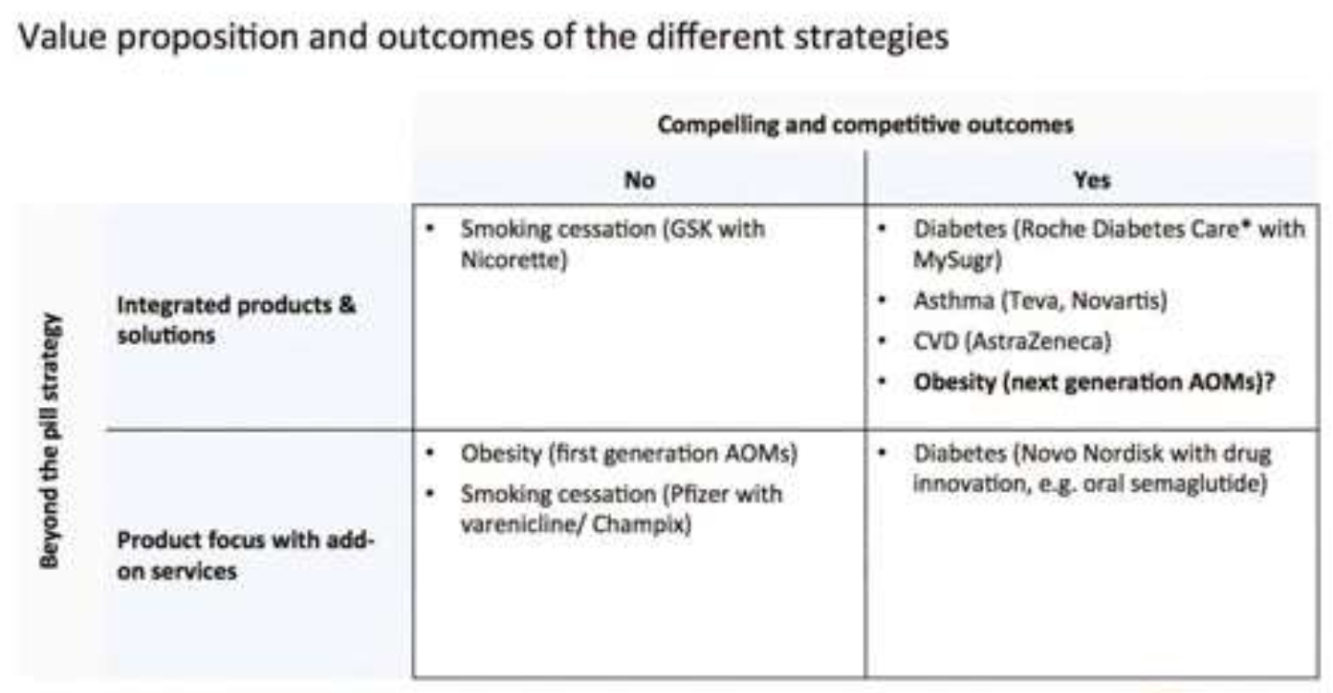
It has become clear that provision of information and advice alone is rarely sufficient and that more comprehensive solutions are required to bring about meaningful, long-term behaviour change. And much of that is now being driven by the pharmaceutical industry.