Over the past decades, advances in information technology have fundamentally transformed the management of chronic diseases, but what impact is this having on the pharma industry?
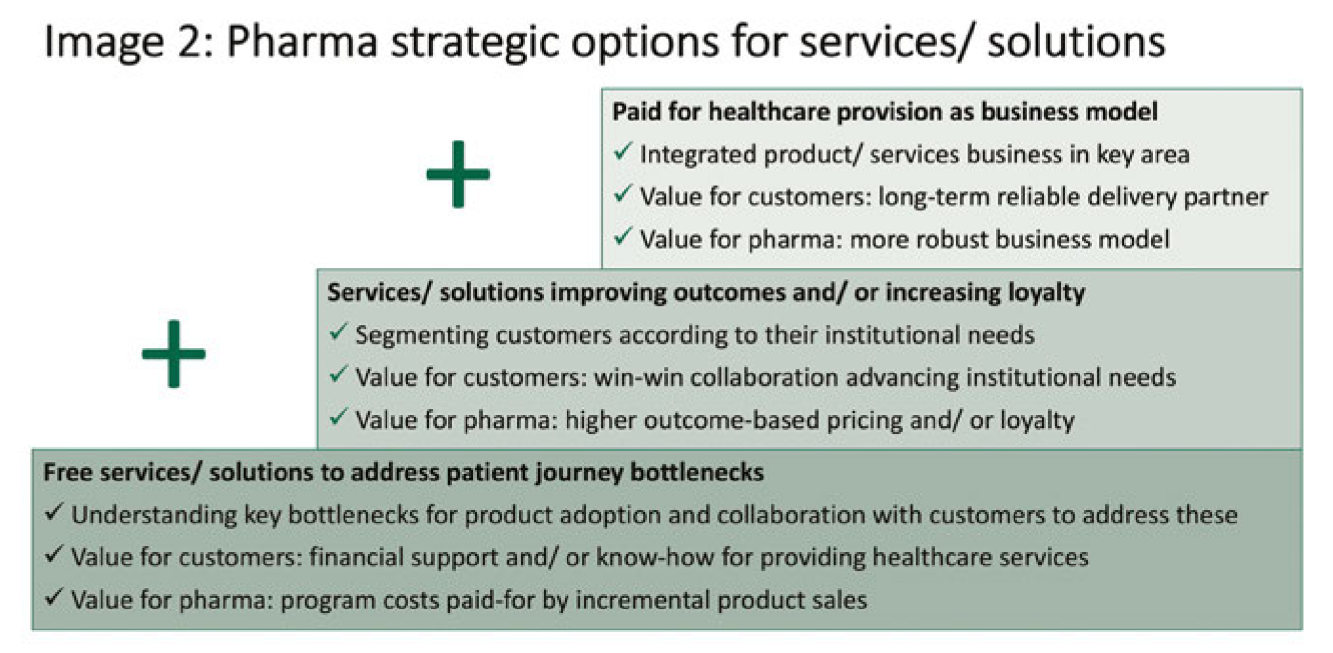
Historically, pharmaceutical executives have invested in healthcare services across the patient journey to address critical patient leakages and unlock significant growth opportunities (see image 2, bottom box).
In our previous PME article, “Value collection: what are the prospects for grouping complementary services around a product”, we explored situations where a product with a non-differentiated clinical profile within its class can achieve a competitive advantage through value-added services that improve outcomes (see image 2, middle box). We proposed that next-generation healthcare combination solutions – integrating complementary products and services around medicines (and devices) – have the potential to deliver superior patient outcomes, as demonstrated by emerging models in obesity management.
In our previous PME article, “Digital healthcare may revolutionise management of chronic diseases, but who is going to pay for it”, we highlighted the emerging business model of digital therapeutics (DTx) – evidence-based interventions designed to prevent, manage or treat medical conditions through software-based solutions that undergo review and certification by regulatory authorities (see image 2, topx box).
In the long term, pharmaceutical companies can aspire to establish leadership within specific chronic conditions, as discussed in our PME article, “Dive in: gaining long-term leadership in a therapy area can be commercially invaluable”. Future leaders in chronic disease management will be those able to demonstrate superior outcomes by combining innovative therapies with value-added services that enhance patient care.
This integrated approach could create a more resilient and differentiated business model, provided that pharmaceutical companies continue to keep pace with therapeutic innovation and evolving standards of care. Ultimately, the leading companies of a chronic condition may become the trusted, recognized brands for managing that disease – successfully combining the scientific strenghts of biopharma with the patient-centric capabilities of digital health and health technology platforms.